


“You can’t defend what you can’t see.”
Yes, yes, you’ve heard this before. Everyone has. It’s the reason you collect telemetry, send it to your SIEM, and action on your playbook via your SOAR. It’s why you follow a CTEM style program.
But there lies the problem. In security, ensuring visibility is a well-established objective. But too often, we focus on ensuring our team’s visibility through their tools: are they receiving the right alerts? Is the tool showing them the right data? Are my tools sharing the right information with each other?
Meanwhile, we forget to ask the more foundational question:
How much can these tools actually see?
Continuous Threat Exposure Management (CTEM) is an excellent example. It’s great for discovering vulnerabilities, prioritizing risks, and integrating them into workflows. But those functions rely on complete visibility into your attack surface. When there are holes at this foundational visibility level, your CTEM won’t point them out; it’ll fill them in as best they can, often inadequately or inaccurately. This leaves you with unknown blind spots and poor output, which result in missed alerts, inaccurate data, and vulnerabilities left open.
Welcome in, adversaries.
Why Is Complete Internet Visibility Important to CTEM?
External exposure is where most modern intrusions start: misconfigurations, shadow IT, remote access drift, and Internet-facing systems that internal scanners never record. Without comprehensive visibility and deep scanning data that can see your entire attack surface, every other piece of your attack surface workflow is less effective. You may be prioritizing and remediating what you know, but there may be elements of your attack surface that your tools have failed to discover.
To be effective and trustworthy, CTEM must draw from a complete data set, which is achieved through comprehensive and continuous Internet visibility. An accurate picture of your attack surface starts from an accurate picture of the Internet: when your CTEM’s source of truth is instead riddled with holes, the output is equally porous. If you can’t see the entire Internet, how do you know parts of your own attack surface aren’t lurking in those blind spots?
Further, attack surfaces are not static. Your tools should pull from real-time data to draw an accurate and complete picture of your attack surface. This requires continuous scanning of the entire Internet: anything older than 24 hours should be considered stale and out of date.
CTEMs and other tools pulling from incomplete Internet visibility is dangerous in and of itself. The problem compounds when tools deliver the output as truth rather than a best-guess, with no mention of the gaps beneath the surface. Pay no attention to the approximations made behind the UI curtain.
Analysts, in turn, assume the seemingly complete picture their CTEM has presented them is, in fact complete. As a result, its underlying holes are never addressed. Never patched. The easiest of targets.
What Does a Complete Visibility for CTEM Management Look Like?
CTEM needs a foundation of a comprehensive, accurate, and up-to-date data set. This is achieved through:
- Deep scanning: Full visibility relies on deep scanning that spans the breadth of the Internet. For example, Censys sees all 65K ports and protocols. Most scanners miss higher, less commonly used ports — which is why adversaries tend to target those. You need to see those, because attackers certainly can.
- Frequent seed discovery: Modern attack surfaces evolve by the minute, making stale inventories a liability. Continuous seed discovery provides the real-time awareness organizations need to keep pace with automated and AI-accelerated threats. Censys scans the entire Internet continuously — most data is no more than four hours old, and no data is ever more than 24 hours old.

What Attack Surface Management (ASM) Vendors Get Wrong
| EASM vendors | Censys | |
| What it does | Actively probes and validates exposures on the assets it knows about | Continuously scans the entire internet to discover every asset, then surfaces exposures across that complete picture |
| Asset inventory scope | Limited to seeded assets and inferred connections. Known unknowns remain unknown. | 65K ports and protocols, entire IPv4 space, refreshed every 4–24 hours. Discovers what you didn’t know to look for. |
| Shadow IT and unmanaged assets | Misses assets outside initial scope — actively validates a subset | Finds internet-facing assets regardless of whether the organization knows they exist |
| False positives | Incomplete inventory creates noise — unvalidated or misattributed assets generate alerts that waste analyst time | First-party scanning data confirms what’s real, reducing false positives at the source before they reach your team |
| The core risk | False completeness. Validation confidently confirms what it found is clean — with no visibility into what it missed. | Find everything first. Then validate. |
| CTEM stage served | Prioritization, Validation — but only across a partial attack surface | Discovery first, fully — the foundation all other CTEM stages depend on |
| The right question to ask | “Are the exposures we found exploitable?” | “Have we found all our exposures — and are any of them exploitable?” |
Why Most CTEM Programs Have a Discovery Gap and How to Close It
Censys ASM is built on the most complete, accurate, and real-time Internet intelligence in the world. When tested against our competitors, we consistently see more, with higher accuracy, and faster (see for yourself). Censys sees all 65K ports and protocols on the Internet, has a database of over 15 billion certificates, and a library of 700+ risks and thousands of CVEs. It pairs this data with DNS insights, emerging threat data via Censys ARC research, AI-driven predictive scanning and relationship building, and more to form the most powerful Internet intelligence engine that exists today — and, therefore, the best foundation for CTEM tooling.
Initially, Censys ASM can help you seed and map your external attack surface — but this is just step one. Equally as important is the ongoing discovery that follows. Censys ASM continuously discovers new assets and organizational relationships to populate your attack surface and ensure it is up to date. This occurs every 4 hours for cloud assets and every 24 hours for non-cloud assets.
In addition, Censys provides intelligent context to help analysts triage faster and more confidently. An AI assistant, reputation-based risk scoring, and natural-language queries allow analysts to interact with data naturally and get the intelligence they need to make quick, evidence-based decisions.
Why Internet Visibility Improves Every Security Tool in Your Stack
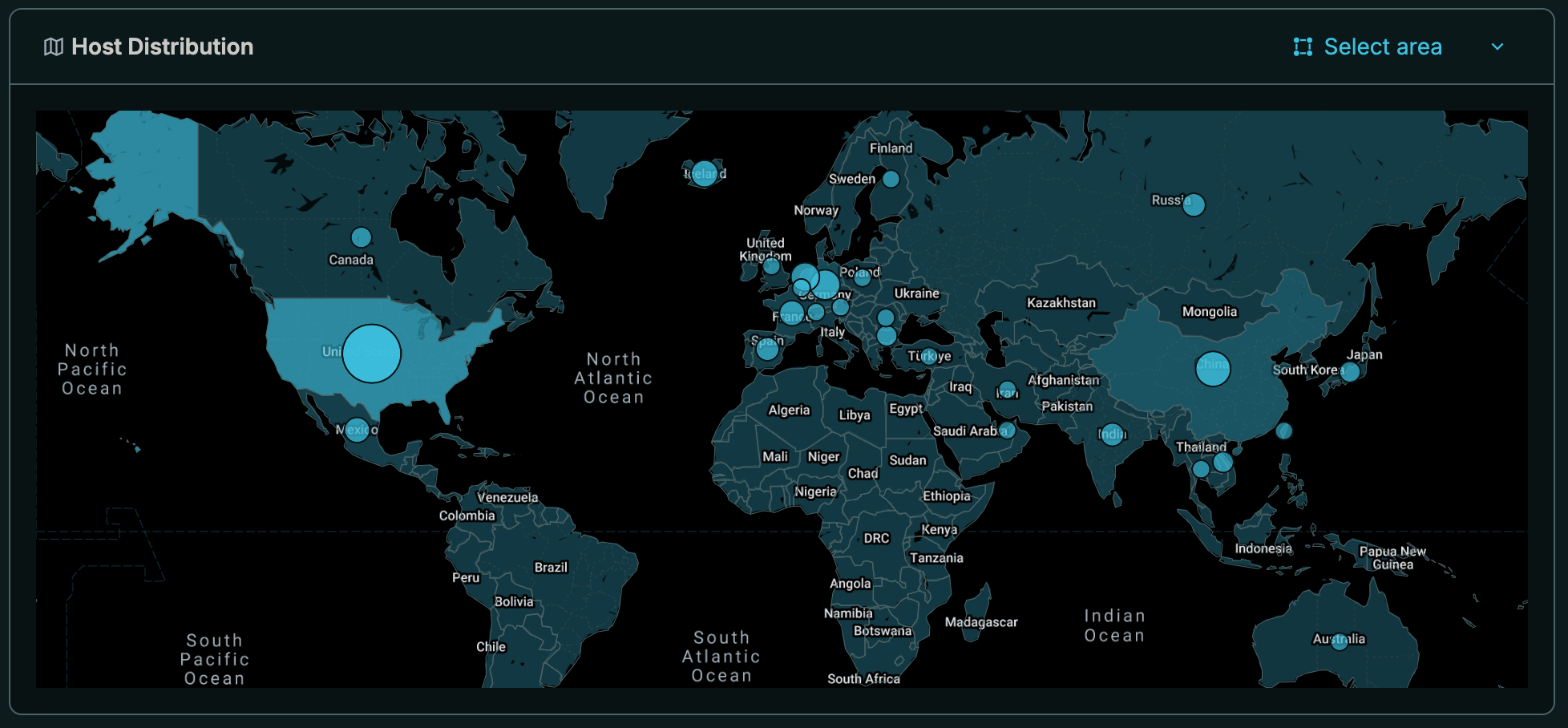
- Accurate and Complete Inventory: SOCs find what others miss with Censys’ first-party scanning data that discovers Internet-exposed assets (including services on nonstandard ports, hosts using self-signed certificates, and even hosts in residential networks) so your inventory accurately reflects what attackers can reach.
- Immediate Exposure Detection: Continuous asset discovery allows organizations to monitor their attack surfaces continuously and alert on meaningful deltas (new hosts, ports, certs, services).
- Reduced Mean Time to Remediate (MTTR): Full visibility and data enriched with intelligent context allows teams to triage and remediate faster.
- Better ROI on Third-Party Tooling: When integrating with third-party tools like AI agents, SIEMs, SOARs, and CTEMs, ASM’s comprehensive and accurate data provides a strong foundation for accurate, reliable and actionable output.
Power Your Exposure Management and CTEM Program With Censys
Like any security tool, CTEMs are only as good as their foundational data inputs. Without accurate Internet-wide visibility, your CTEM ends up reporting on a subset of data that you can only hope captures everything on your attack surface. But “hope” is a vulgar word in security and better left for motivational speeches and fantasy novels. Security professionals need their source of truth to be just that: the truth, the whole truth, and nothing but it.
Censys data’s comprehensiveness, accuracy, and freshness is proven to be better than any other vendor. That makes it indisputably the best source of truth when it comes to Internet intelligence and visibility.
Perhaps that’s why most of Censys’ competitors use Censys data.
Request a demo to see how Censys ASM can detect, monitor, and defend your external attack surface today.